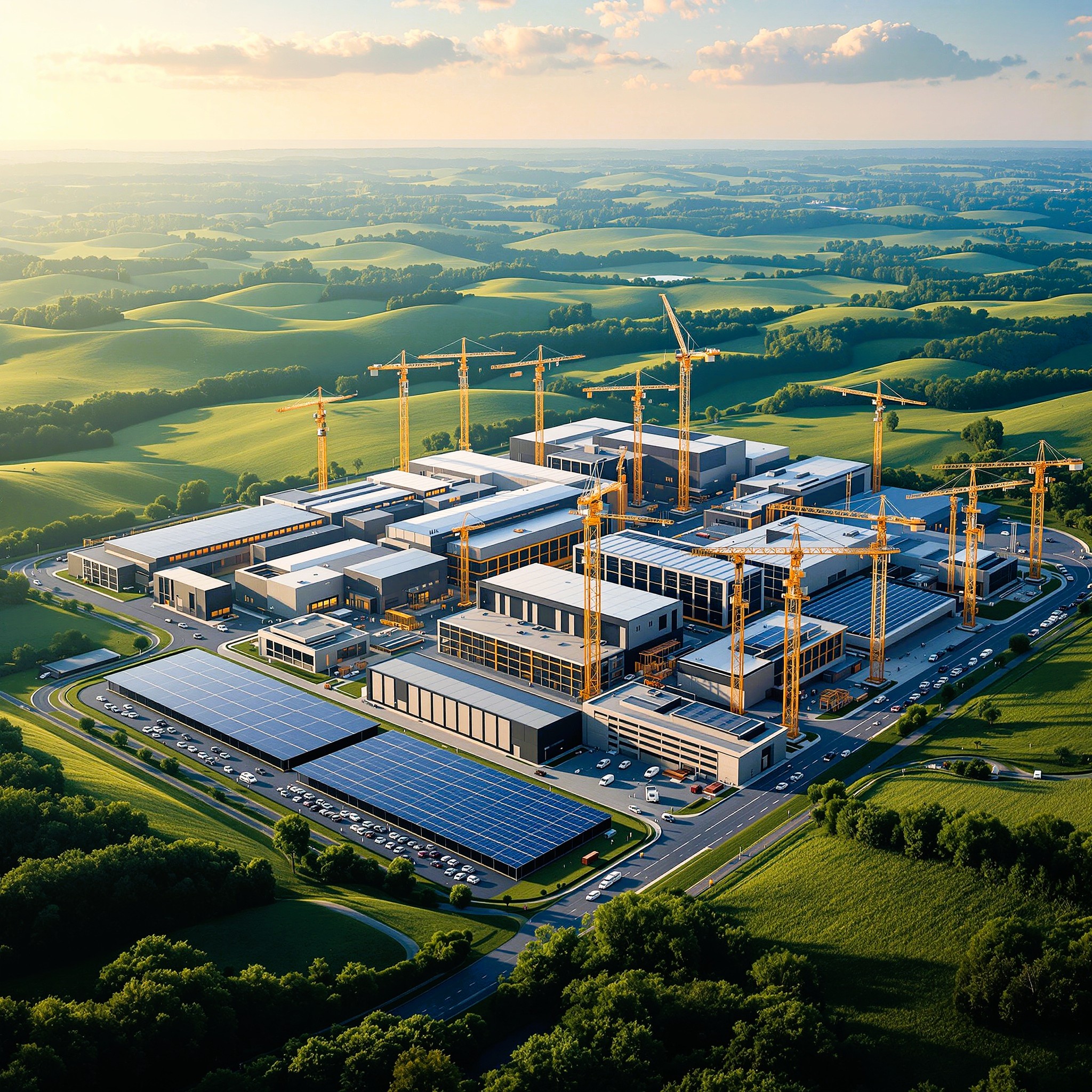
The Spillover Effect of Data Centers into the Southwestern Ohio Area
When we save a photo to Instagram, stream a movie on Netflix, or ask an AI a question, we often think that information goes up into "the Cloud." But the Cloud isn't actually in the sky. It lives in massive, secure buildings called data centers. For a long time, places like Northern Virginia or Silicon Valley in California were the main homes for the internet. But recently, that has changed. The internet is moving to the Midwest, and specifically, it is spilling over into our backyard in Southwestern Ohio.
This region is quickly becoming known as the "Silicon Heartland." While Central Ohio (around Columbus) saw the first big wave of these tech buildings, there is practically no room left there. The power grid is full, and land is expensive. Because of this, the biggest tech companies in the world—like Amazon, Google, Microsoft, and Meta (Facebook)—are looking south. They are expanding aggressively into the corridor between Dayton and Cincinnati, as well as our neighbors in Northern Kentucky and Southeastern Indiana.
This expansion is called the "Spillover Effect," and it brings a massive opportunity for our local economy.
Why Here? Why Now?
Why would a trillion-dollar company want to build in a place like Miami Township or Jeffersonville, Indiana? The answer comes down to three things: electricity, water, and location.
These data centers are huge computers that run 24 hours a day. They get incredibly hot and need massive amounts of power to run and water to stay cool. Our region has affordable power and plenty of water compared to the dry western states. Plus, we are within a day’s drive of highly populated cities, meaning the internet is faster (or has "lower latency") for millions of people.
Not Just a Quiet Warehouse
A common specific misconception is that a data center is just a big, quiet box that employs five people and doesn't do much for the town. While it’s true that once they are running, they don't have thousands of workers inside like a car factory, the creation and maintenance of these centers create a massive ripple effect for local businesses at every stage. This is where the "Miami Valley Thrive" spirit of supporting local dreams comes into play.
The Demand for Specialized Services
The exciting part of this growth is not just the tech giants themselves, but the hundreds of small and medium-sized local businesses needed to keep them running. These data centers are needy! They require a constant stream of services, creating steady work for our local entrepreneurs.
Here are the specific areas where our region needs to step up and expand services:
1. The Skilled Trades Boom
Before a single server turns on, the building must be built. These aren't normal warehouses; they are "powered shells" designed to withstand anything.
Electricians:* We need high-voltage experts. The power requirements for one campus can be equal to a small city.
HVAC and Cooling:* As Artificial Intelligence (AI) grows, computers run hotter than ever. Special "liquid cooling" technicians and plumbers are in high demand to install complex pipe systems that keep the servers from melting.
Fiber Optic Technicians:* miles of high-speed internet cables need to be laid under our roads and fields. We need local crews who know how to splice and repair these delicate glass threads.
2. Security and Property Management
Data centers are like fortresses. They hold private data, so they need 24/7 protection.
Fencing and Landscaping:* The perimeter needs to be secure but also look good. Local landscaping crews are hired for year-round maintenance, mowing, and snow removal.
Security Teams:* These sites hire local security firms for round-the-clock patrols, requiring guards, camera installers, and gate operators.
3. Green Energy Partners
Big tech companies have promised to use 100% renewable energy. They can't just plug into the wall and hope for the best. They are actively looking for local landowners and solar developers to build solar farms and wind projects nearby to feed their batteries.
4. "Soft" Services for Workforce
During the construction phase, which can take 3 to 5 years, thousands of construction workers are on site. They need places to eat, sleep, and shop. This boosts our local diners, food trucks, hotels, and supply stores. Even after construction, the specialized technicians who work there need uniform services, cleaning crews who understand how to work around sensitive electronics, and catering for corporate events.
Keeping the Money Home
The best part about the Spillover Effect is that it aligns with the goal of strengthening our local economy. When a data center signs a contract with a local HVAC company in Kettering, or a landscaping crew in Florence, that money stays here. It goes into the pockets of our neighbors, who then spend it at local grocery stores and boutiques.
The expansion of data centers into Southwestern Ohio, Northern Kentucky, and Southeastern Indiana is more than just concrete and cables. It is a signal that our region is open for the future. By expanding our local services to meet this high-tech demand, we ensure that the Silicon Heartland isn't just a nickname, but a reality that helps every family, from the plumber to the programmer, thrive right here at home.
Cheers, and all the Best, Timothy
https://www.linkedin.com/pulse/spillover-effect-data-centers-southwestern-ohio-area-pawlaczyk-te1se
Sources & Credits
Information regarding regional expansion projects and energy demands was sourced from the following reports:
* Kentucky Lantern | "Driving surge in demand for power, data centers eye Kentucky"
[Read Report](https://kentuckylantern.com/2024/07/09/driving-surge-in-demand-for-power-data-centers-eye-kentucky/)
* Data Center Dynamics | "S&P Global: US data centers to require 22% more grid-based power by end of 2025"
[Read Report](https://www.datacenterdynamics.com/en/news/sp-global-us-data-centers-to-require-22-more-grid-based-power-by-end-of-2025/)
* Dayton 24/7 Now | "Ohio's data center boom fuels economic growth but future challenges loom"
[Read Report](https://dayton247now.com/news/local/ohios-data-center-boom-fuels-economic-growth-but-future-challenges-loom)
* About Amazon | "Amazon plans $11 billion investment in Indiana data centers"
[Read Report](https://www.aboutamazon.com/news/company-news/amazon-15-billion-indiana-data-centers)







Instagram
LinkedIn
Youtube
X